Categories
Student Access

Scholarship Is Access Infrastructure

Scholarship support is not only a gift to one student. It is access infrastructure: a practical support system that can help a student stay connected to education, training, completion, and future work.

Louisville Fund A Student Foundation frames scholarship support as a community responsibility with public boundaries. The goal is to reduce practical barriers, protect student dignity, and steward donor intent without promising any specific award or outcome.

What Access Infrastructure Means

Infrastructure is what makes movement possible. In education, access infrastructure may include tuition support, books, tools, transportation help, emergency continuity support, and clear documentation.

  • Students need more than encouragement when practical barriers appear.
  • Donors need a clear stewardship path before they give.
  • Communities benefit when education access is treated as serious public work.

Why Donor Trust Matters

Scholarship support is stronger when donors can see the mission, the boundaries, and the reason for each support category. Public clarity reduces confusion and protects both students and supporters.

How LFAS Holds the Boundary

LFAS can help explain support pathways, but support decisions must remain documented, careful, and nonprofit-safe. Public pages should never imply automatic aid, guaranteed eligibility, or private student disclosure.

Related LFAS Paths

Reference Points

Public Boundary

LFAS does not guarantee scholarship support, emergency support, admission, graduation, licensure, employment, donor participation, tax treatment, legal outcome, financial outcome, or any specific benefit. This article is public information, not legal, tax, financial, enrollment, or professional advice.

Categories
Scholarship Impact

Scholarship as Protective Infrastructure for Human Potential

Scholarship should not be understood as charity alone. At its best, it is protective infrastructure for human potential.

When a student lacks funds, the problem is rarely only financial. The absence of support can slow entry into training, increase dependency on harmful debt, interrupt momentum, and push capable people away from lawful educational and workforce pathways. Small amounts of support, when well-timed and responsibly structured, can therefore change far more than a tuition balance. They can preserve a future.

This is why scholarship work should be framed with institutional seriousness. It is not simply generosity. It is an intervention into opportunity structure. It protects a student’s ability to continue, complete, qualify, and move toward contribution. In many families, that effect extends beyond one person. It stabilizes households, restores confidence, and creates examples that younger relatives can follow.

Louisville Fund A Student Foundation exists inside that logic. The goal is not only to give. The goal is to widen lawful access to advancement while preserving dignity. Scholarship should not infantilize recipients. It should honor effort, reduce unnecessary barriers, and strengthen the bridge between aspiration and disciplined follow-through.

This work also matters publicly. Communities that invest in students are not merely supporting individual dreams. They are investing in workforce capacity, civic stability, and intergenerational resilience. A student helped at the right moment may become a licensed professional, a business owner, a parent with greater economic security, or a future supporter of others.

For that reason, scholarship should be discussed in the language of infrastructure, stewardship, and public value. It belongs within a larger ecosystem of institutions that teach, document, advocate, and serve. Education, policy, and community support are strongest when they reinforce one another.

A scholarship does not eliminate the need for discipline, standards, or effort. It simply keeps the path open for someone prepared to walk it. That is often the difference between stalled potential and realized contribution.

This essay is offered for public-information and philanthropic reflection purposes. It does not constitute financial, legal, or tax advice for any specific donor, recipient, or organization.

How LFAS Keeps Support Responsible

Protective scholarship infrastructure depends on clarity as much as generosity. LFAS now keeps separate public pathways for donor stewardship, student dignity, privacy, transparency, and donation-path clarity so support can be handled with discipline rather than impulse.

LFAS does not promise or guarantee scholarship awards, admission, graduation, licensure, employment, tax treatment, financial results, or any specific outcome. The foundation’s public role is to support access, transparency, documentation, and dignity within responsible nonprofit boundaries.

Categories
Scholarship Impact

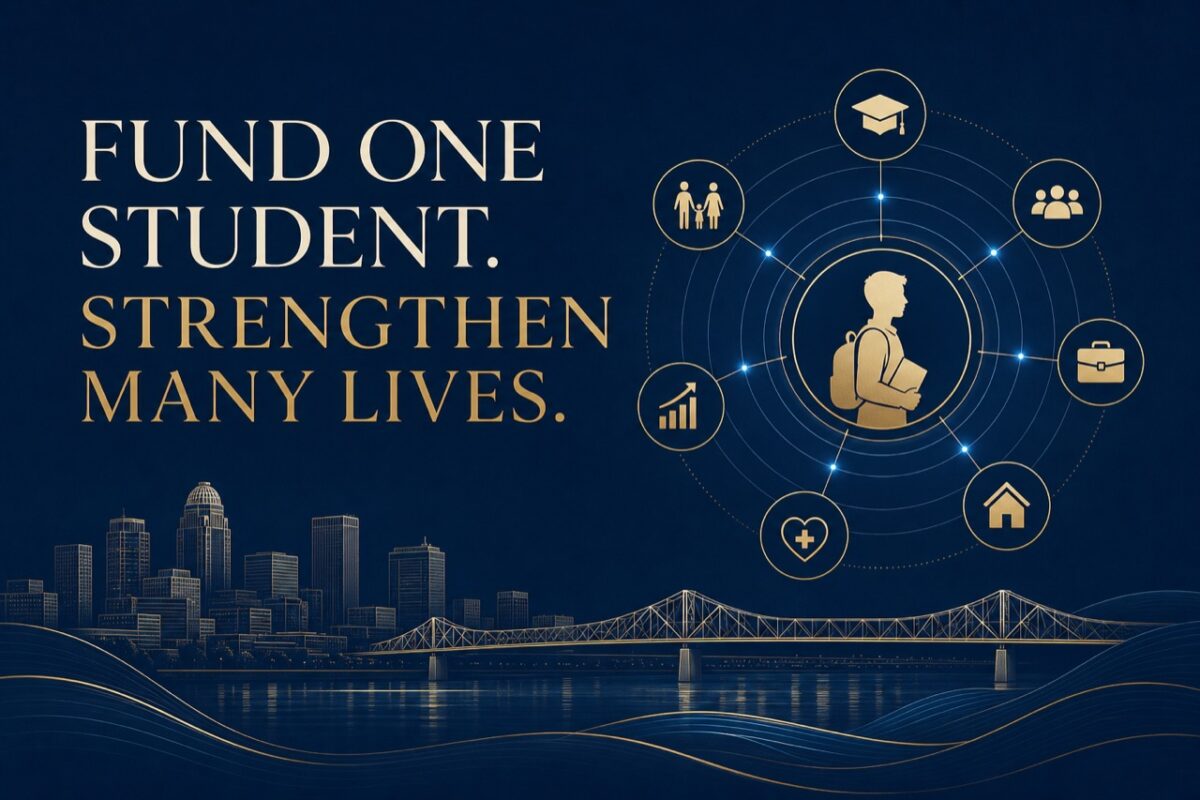
Scholarship as Economic Infrastructure: Why Funding One Student Can Change an Entire Family’s Trajectory

The most disciplined philanthropy does not confuse generosity with impact. It asks a harder question: where can one dollar of support produce the greatest lawful, durable change in human trajectory? In many communities, one of the strongest answers lies in targeted educational access—especially where modest funding can move a student into a regulated profession, stable earnings, and eventually entrepreneurial possibility.

Scholarship, in that setting, is not a sentimental gesture. It is economic infrastructure at human scale.

The logic is straightforward. A student who cannot access training remains blocked not because of lack of will, but because the bridge between aspiration and entry is missing. When that bridge is built responsibly—through tuition support, fee assistance, licensure preparation, or practical educational enablement—the resulting effect is rarely isolated to one person. The impact often ripples through children, spouses, parents, households, and local business ecosystems.

This is particularly true in workforce-linked fields. Where training leads toward lawful professional participation, scholarship funding can produce unusually direct conversion from assistance to income generation. The support is not merely consumptive. It can become enabling capital.

That matters in the current economic environment. Many aspiring students are adults. Many support families. Many come from immigrant or low-income households. Many cannot pause life long enough to wait for slow or abstract opportunity. They need an access mechanism that respects both urgency and dignity.

That is why scholarship platforms should be judged not only by heart, but by architecture.

A strong scholarship platform should identify real educational barriers, direct funding toward pathways with credible completion logic, preserve transparency about use of funds, and emphasize outcomes without reducing students to statistics. Donor trust grows when compassion is matched by discipline. Communities support institutions that can demonstrate both moral seriousness and operational clarity.

For Louisville Fund A Student Foundation, this is the opportunity. The foundation can position itself not merely as a charitable vehicle, but as a local access-capital institution—one that helps convert community generosity into lawful mobility. That framing is stronger, more durable, and more legible to serious donors, grantmakers, and civic partners.

Importantly, scholarship support should never be romanticized as a cure-all. It is one part of a larger ecosystem. Students still need quality instruction, regulatory alignment, scheduling support, community encouragement, and often a credible pathway into work. But where those elements exist, scholarship can become the catalytic piece that changes what is possible.

In policy terms, this is exactly why education access deserves philanthropic attention. Not every intervention creates multiplying effects. Scholarship tied to practical, regulated, workforce-facing education often does. It can help move a person from economic fragility toward self-support. And once a household stabilizes, the surrounding community gains as well.

The highest purpose of philanthropy is not image. It is well-placed enablement. Funding one student may not look dramatic at first glance. But in the right institutional environment, it can change the economic grammar of an entire family.

That is not charity at its weakest. It is stewardship at its strongest.

LFAS Donor and Student Pathways

Readers who want to turn this infrastructure idea into practical support can start with the current LFAS trust pathways. These pages explain donation routing, stewardship expectations, student privacy, and no-promise boundaries.

LFAS does not promise or guarantee scholarship awards, admission, graduation, licensure, employment, tax treatment, financial results, or family outcomes. Student support is one carefully documented part of a larger education and workforce-access ecosystem.

Research & Information Disclaimer

This publication is provided for educational, research, and public-information purposes only. It reflects institutional analysis based on publicly available information, practical experience, and internal interpretation as of the publication date. It does not constitute legal advice, tax advice, investment advice, or a guarantee of regulatory, financial, or operational outcomes. Readers should consult qualified legal, financial, regulatory, or other professional advisors before acting on matters discussed herein.

References